
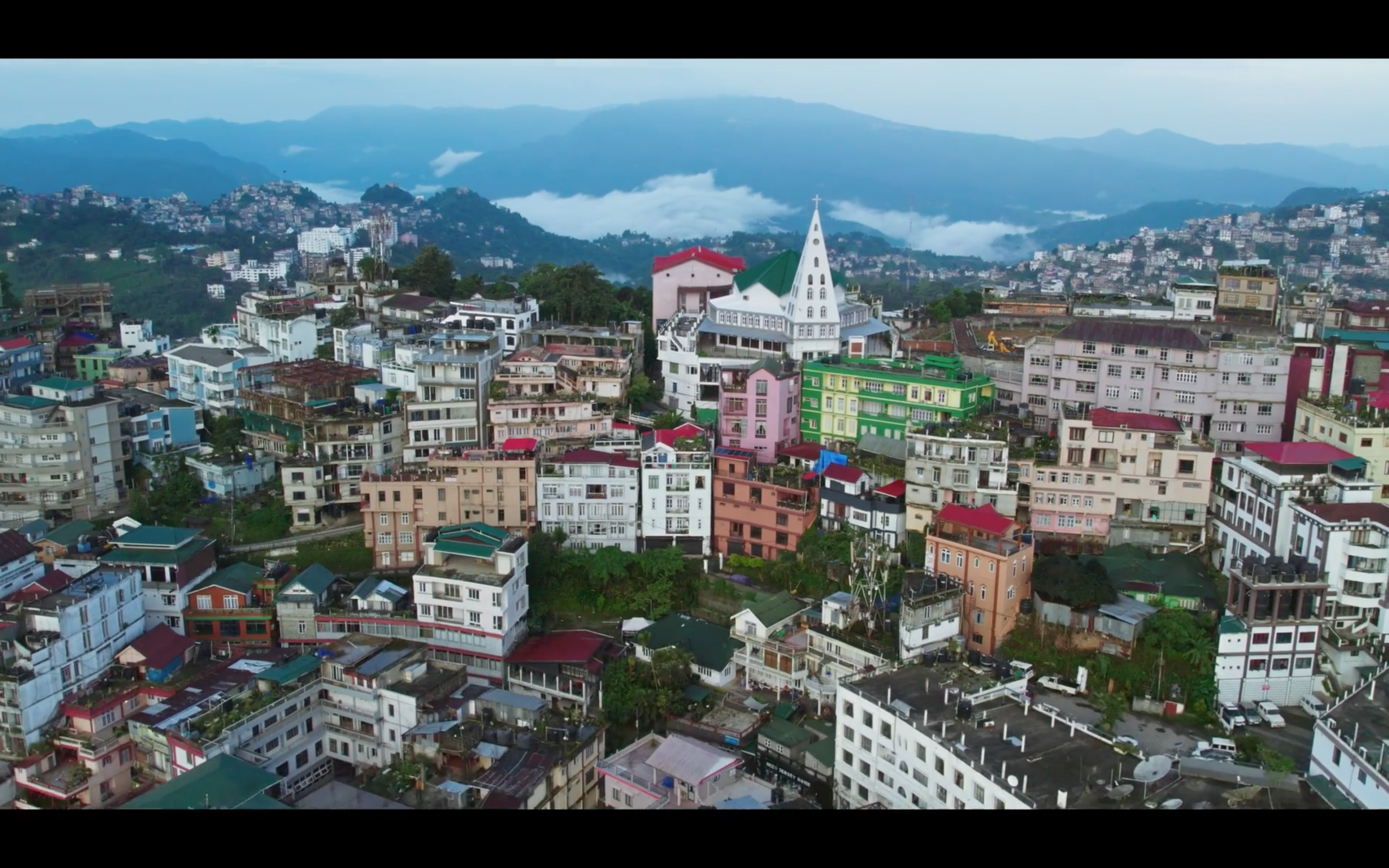
Chalo India with Eric Ji is a voyage for the senses. Every part of you will delight in the colors that speak, the music that lifts you up, and the people who will make you fall in love with a little place called Mizoram, the true heart and soul of this film.
And speaking of heart and soul, it is Rajdeep Choudhury’s heart and soul that you see, and most importantly, feel. Raj is the director behind this gorgeous documentary, and paired with the charisma of historian Eric Ollerenshaw, the film’s presenter, the result is simply electric.
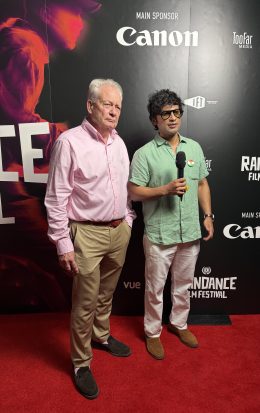
This powerful duo goes way back. They first met when Eric was a Member of Parliament (MP) and Raj was working there.
“I was terrible at my job,” Raj says.
“No, you weren’t terrible. You were just better off doing something else,” Eric interrupts with a smile.
Raj continues, “He told me I should go to film school. I came to Raindance, I studied here, then went to India and trained as a screenwriter and actor, and I’m still acting. After I did the movie A Teacher’s Gift, I didn’t have a job, and I’d always wanted to do something about India. So I started writing, and I wanted it to be a documentary, something presented by someone that felt really real. I started with Varanasi, which is one of the oldest continuously inhabited cities in the world. That became the first episode of this documentary series. Then I saw a post from the High Commissioner launching a campaign called Chalo India, which means ‘Let’s Go to India,’ encouraging people to visit the country. I contacted them about the project and asked about using the name. I thought of Eric as the presenter, even before he knew it.”
In India, adding “Ji” to someone’s name is a sign of respect. Raj explains that people often use it when speaking to or about someone they deeply admire. That is why we see it in the title: Eric Ji. It is a beautiful gesture of respect toward Eric, who is also an independent producer and has worked on projects with Raj, including A Teacher’s Gift, which Raj mentioned earlier.
I asked Eric what his reaction was when Raj invited him to be part of the project.
“Well, it was instinct, really. We’d already worked together, and we have a mutual interest in film. He said, ‘I’m just doing a pilot to show what India is.’ I thought this was a test and that he’d show it to people and then get somebody really professional to do it. But the pilot took off in ways I don’t think even Raj expected, and then he asked if I could help him with the other parts of the series. For me, it’s been a fantastic opportunity, but I still think somebody could do it better.”
On that point, I have to disagree. Eric is not only articulate and blessed with a remarkable screen presence; on and off screen, he is one of the most charismatic people you could meet. Under Raj’s direction, he becomes pure light.
I continued with my next question: “the film focuses on people and everyday life rather than traditional tourism imagery. Why was it important to tell Mizoram’s story through its communities?”
Raj responds immediately:
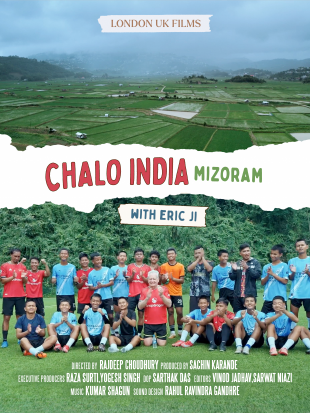
“Mizoram has never been seen on screen. Never. I come from that region, and it’s very difficult to film there because it’s a protected place. The people protect it. Getting permission to film there is something huge. They trusted me and trusted my vision, and obviously Eric’s profile helped.”
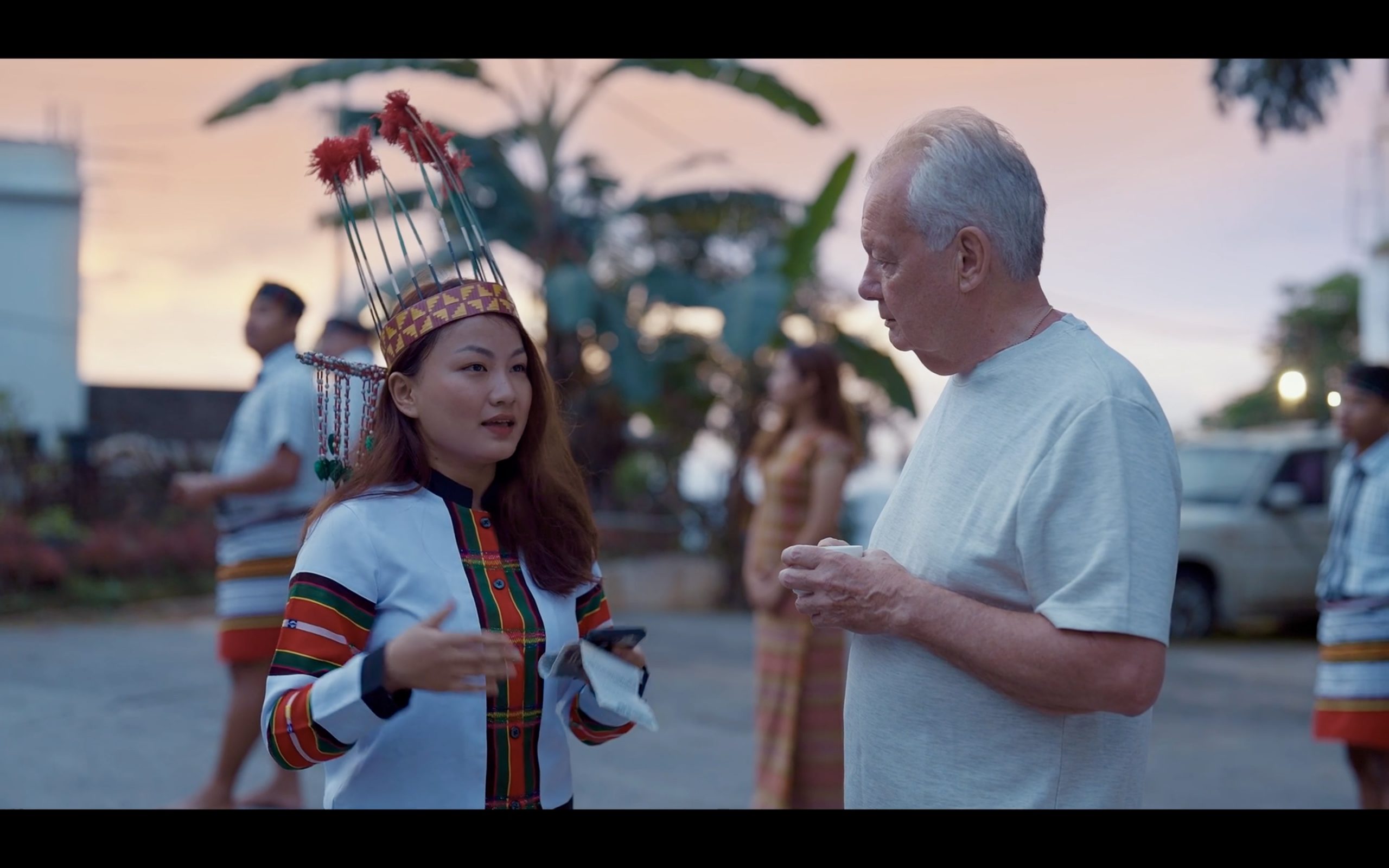
What Raj shows from the first shot to the very last is the strength of the women of Mizoram. He wanted to capture the fact that they lead society in so many ways and contribute through every role they take on.
“That was something very important to me,” he says. “I also wanted to show how untouched this place is, how beautiful it is. I think people present a place better than anything else, and these people are so innocent and so real. I want audiences to see that and be inspired to learn more about the place and its culture.”
As Eric says in the film, there are moments that look and feel like something out of a Hitchcock movie. The way Raj captures Mizoram is deeply cinematic, but perhaps that is because the place itself feels cinematic, in its purity, in the generosity of its people, in the warmth that seems to exist everywhere. It is difficult to explain in words. It is a feeling. One that becomes clear the moment you watch the documentary. I can only imagine what it must feel like to stand there in person.
“Music, faith, and community play important roles in Mizo society. How did these elements shape the narrative of the documentary?”, I asked next.
Eric reflected on the experience of filming inside the church, where faith and love seem to radiate through the screen.
“The professor we interviewed says that literacy is so high in Mizoram because of people’s desire to read the Bible. So it’s all bound together in that culture, their faith, church attendance, literacy, and education, which is extraordinary for a place most of the world has never even heard of.”
“Why do you think we don’t hear more about it?” I asked.
“I think it’s because of its size and where it is,” Eric replied. “It’s sandwiched between Bangladesh, which has its own challenges, and Myanmar, which has its own challenges. And in between is this haven of peace, with people embracing modern life while maintaining a huge respect for their culture. They’re outgoing, they travel the world, and yet they remain deeply connected to where they come from. I think the main reason we don’t hear about them is geography.”
Raj adds another reason: access.
“My father was the line producer, and he worked in Mizoram for many years, so he had lots of friends there. Without my father, there’s no way I could have reached those places. Not a chance. From the first shot to the last, my father made it possible.”
We spoke for a while about how genuine and honest the Mizo people are. About their innocence, as Raj described it. I wondered whether they worried that increased attention from the outside world could eventually change the place, that tourism could erode some of the very qualities that make Mizoram so special.
Raj explained that Mugdha Sinha, Managing Director of India Tourism, is focused on attracting the “right travellers.” The goal is not quantity, but quality: visitors who respect the land, the people, and the culture they are entering.
Finally, I asked what it felt like to premiere the film at Raindance, one of the most important festivals for independent cinema.
Raj responds, “I studied here. I’ve made other projects, but this is the first one that qualified. Just being here is huge. It feels like coming home. I know how prestigious this festival is, and honestly, I’m very emotional. A lot of the people I work with came through Raindance too, so from my student days to this moment, it’s been an incredible journey.”
And perhaps that is what Chalo India with Eric Ji ultimately is: a journey. Not simply across a landscape, but into the soul of a place rarely seen and even more rarely understood. Through Raj Choudhury’s deeply personal lens and Eric Ollerenshaw’s genuine curiosity, Mizoram becomes more than a destination, it becomes a feeling. A reminder that some of the most extraordinary stories are found not in the places everyone talks about, but in the corners of the world quietly waiting to be discovered.
When the credits roll, what stays with you is not just the beauty of Mizoram, but the warmth of its people, the pride of its culture, and the sense that for a brief moment, you were welcomed into something truly special.